Banyule City Council’s street-tree clearance compliance works have been temporarily paused and are being broadly assessed.
Residents welcome Banyule City Council’s temporary pause and its reported work on engineering solutions for some affected trees. These are positive steps—but the community still has no published process showing what will happen next.
Banyule City Council has not published a detailed process, assessment criteria, timetable or a revised Banyule-wide policy. Until it does, residents cannot know how trees will be assessed, when works may resume or whether less destructive solutions will be applied consistently across Banyule.
A welcome step, but not yet a lasting safeguard for Banyule’s mature street trees.
Engineering solutions reported
Council says solutions have been identified for some trees. Delivery details have not been published.
No published process
Banyule City Council has not published its process, criteria, timetable or a revised Banyule-wide policy.
Council update
What Banyule City Council says. What residents still need to know.
Banyule City Council says it is implementing its Road Management Plan and that approximately 270 street trees are currently being considered for works. Residents still need an explanation of what has changed, why trees that have stood for generations—many for more than 50 years—are now being treated as requiring intervention and why Council is interpreting the “trafficable portion” of local streets as extending from kerb to kerb.
Banyule City Council has advised residents
Engineering solutions have been identified and funded for around 50 trees.
Council says around 70 further trees have been identified for pruning, with the proposed impact described as low to manageable.
Council says it has now identified the trees that can be managed through pruning. The campaign therefore understands the remaining 150 “more complex trees” to be likely candidates for removal.
Council has not published
The affected locations and proposed treatment for each tree.
A definition of “manageable impact”.
The assessment criteria and decision pathway.
A timetable for decisions or resumed works.
Delivery details for the reported engineering solutions.
A Banyule-wide policy governing the program.
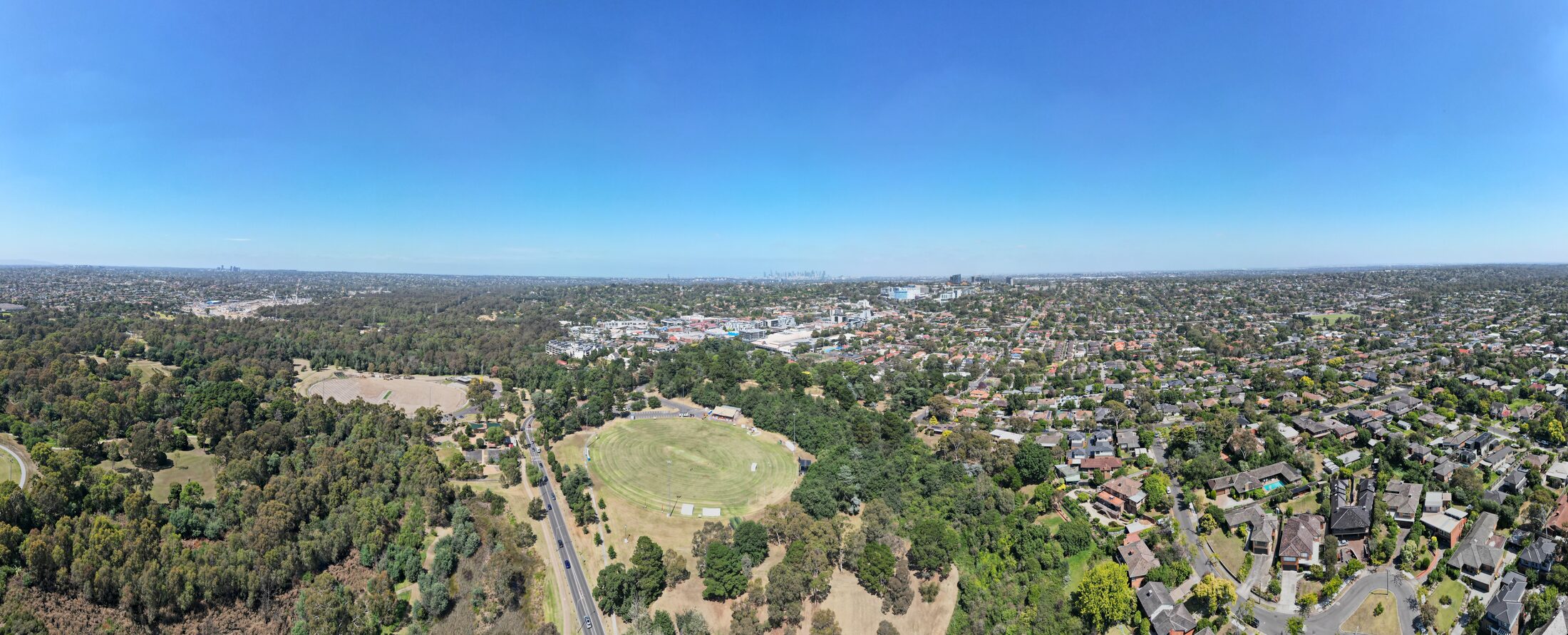
Affected trees across Banyule
The pause came after damage was already done.
Some trees have already been removed or heavily pruned. Others remain in an uncertain position. Residents deserve accurate, tree-by-tree information before any further work proceeds.
Lost
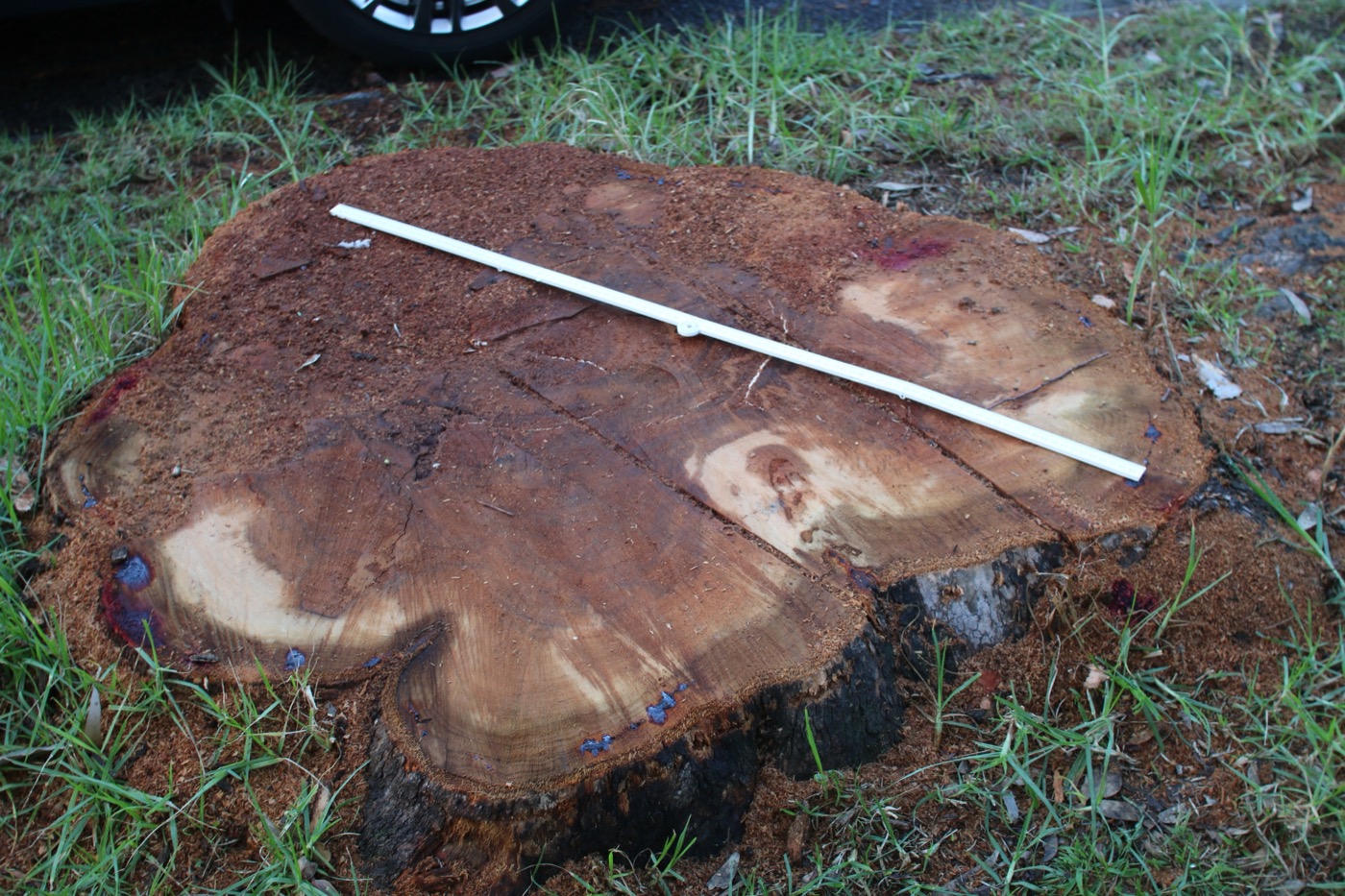
Recently removed 20 m Yellow Box
This mature Yellow Box near Martin Street and Golders Street in Heidelberg was removed during the week of 22 May 2026 as part of Council’s risk-mitigation program.
Community observations recorded it as healthy, with a trunk diameter of approximately 1.2 metres and an estimated age of more than 60 years.
Major pruning
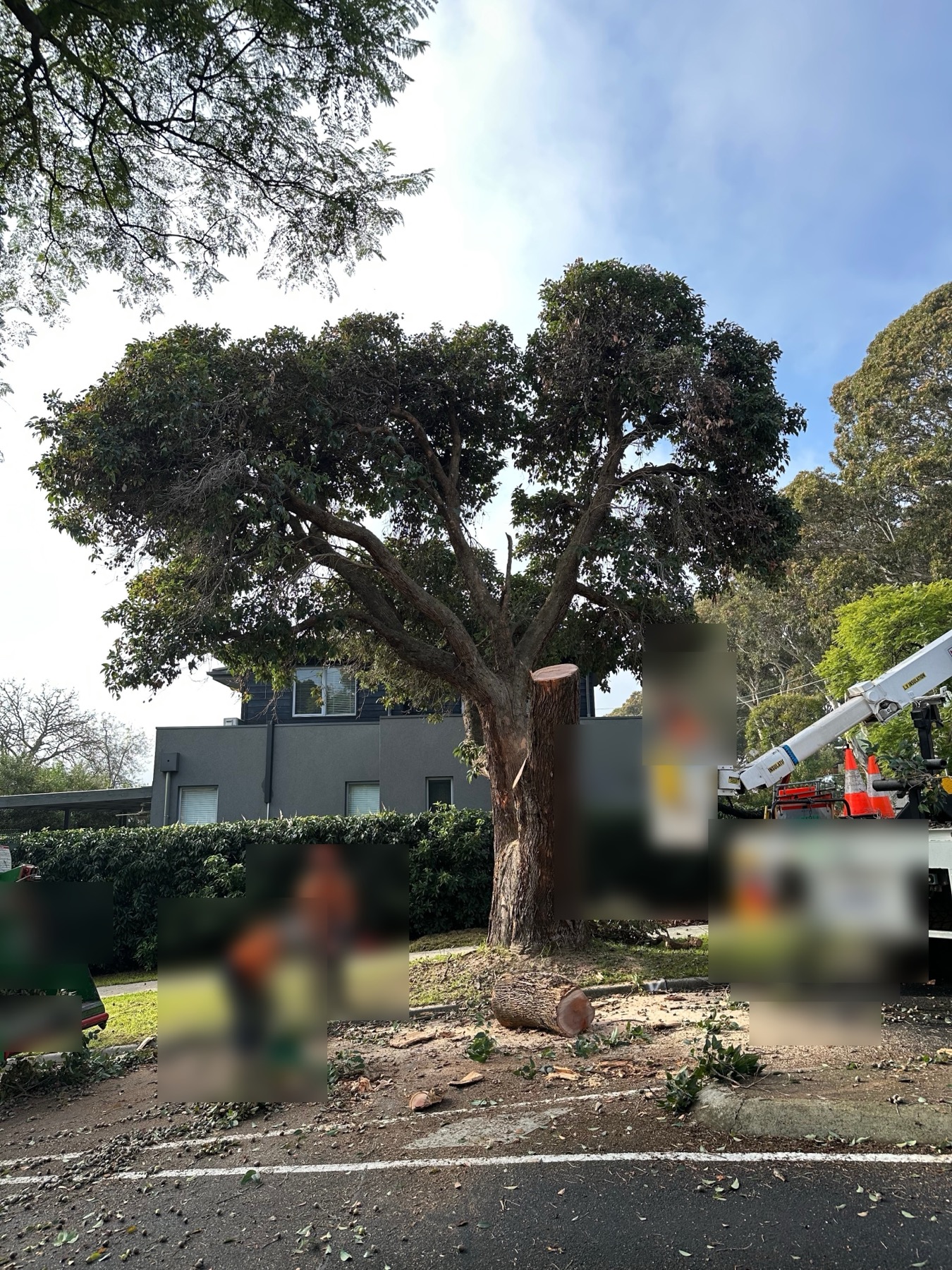
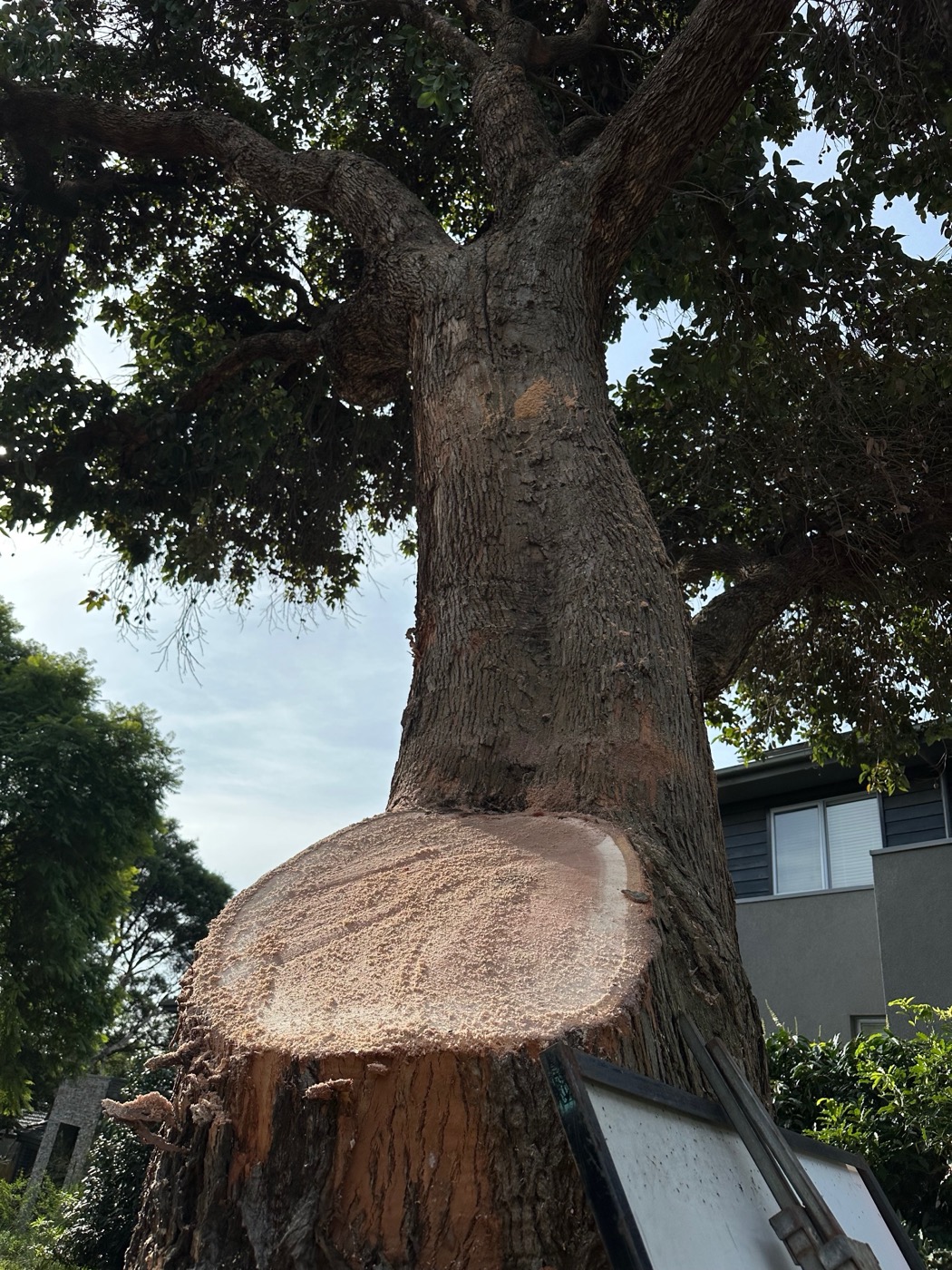
Red Flowering Gum heavily pruned
This mature Red Flowering Gum near Martin and Brown streets was heavily pruned on 28 May 2026 as part of Council’s program.
Approximately two-thirds of its canopy was removed, including a large trunk section approximately 80 centimetres in diameter. This scale of canopy loss was a consequence of Banyule City Council applying its “kerb-to-kerb” interpretation of the “trafficable portion”.
Works paused
18 m Yellow Box proposed for removal
This mature Yellow Box near Martin and Brown streets was proposed for removal as part of Council’s risk-management program. With works temporarily paused, its long-term status remains unclear.
The tree is estimated to be more than 80 years old and is visible in the 1944 Aerial Survey of Heidelberg.
Status unclear
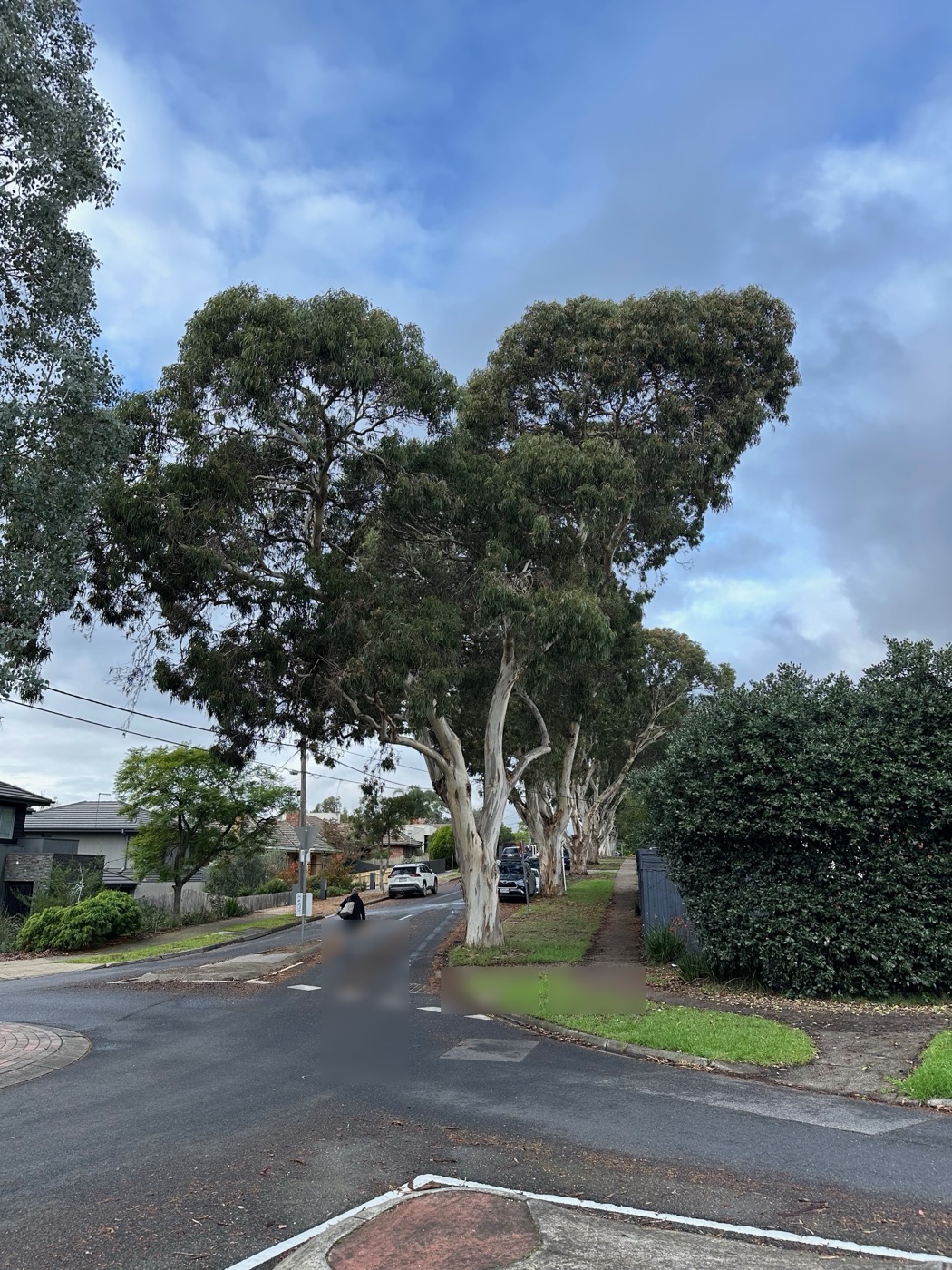
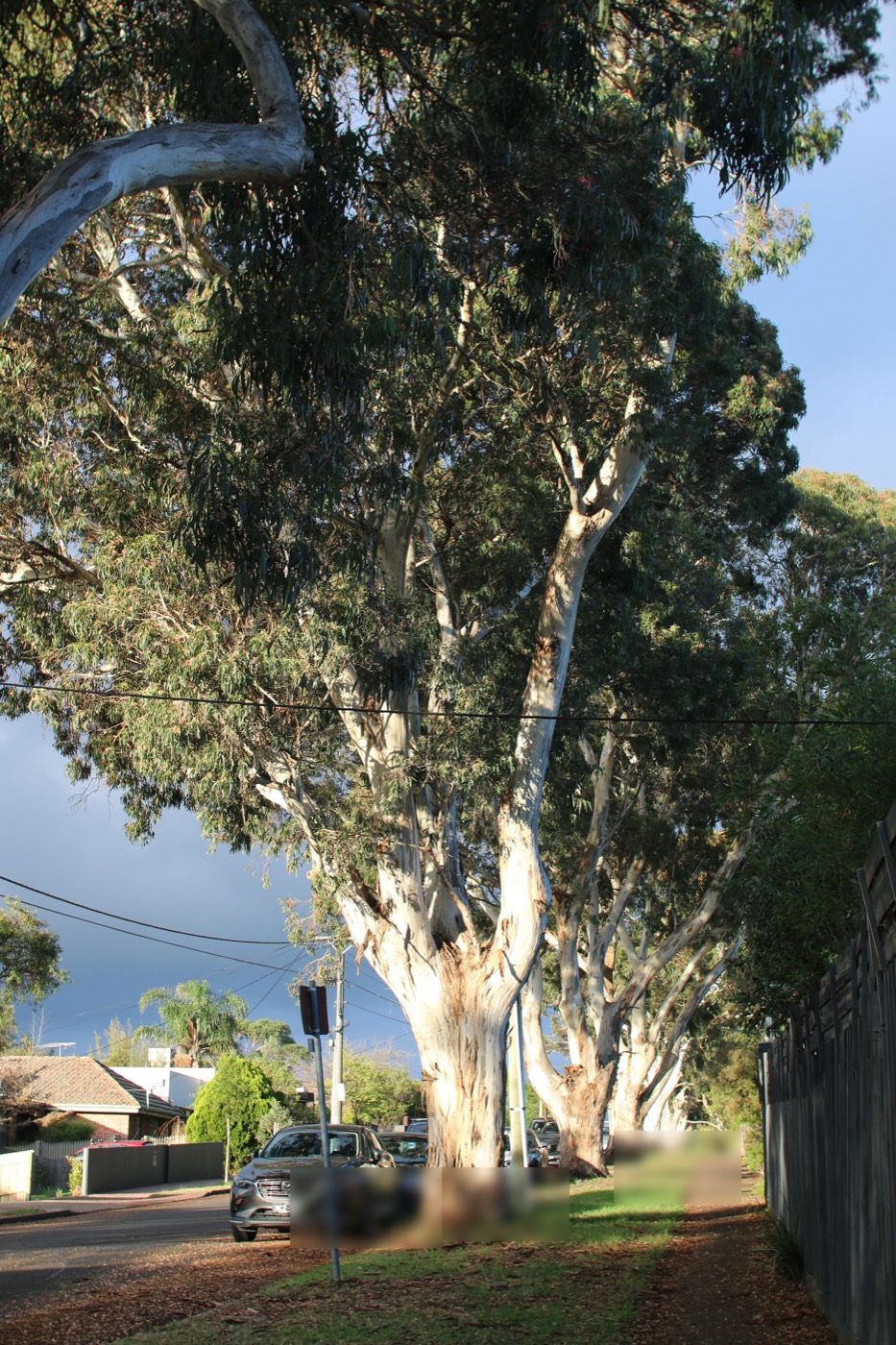
Valued local canopy
This stand of Yellow Box on Brown Street, Heidelberg, represents the mature local canopy potentially affected by the broader program. Council has not published a municipality-wide list or tree-specific status that would clarify what happens next.
Why protection matters
Canopy is working infrastructure.
Healthy, mature street trees cool local streets, shade pedestrians and parked cars, support bird and insect habitat, soften harder streetscapes and maintain Banyule’s leafy neighbourhood character.
Established mature trees cannot simply be replaced within our lifetimes. A young replacement tree cannot provide the same canopy, habitat, cooling or neighbourhood presence for decades.
As housing and hard surfaces intensify, established canopy becomes more important, not less. Recent Victorian planning changes and updates to the Banyule City Plan mean that more than half of Banyule’s non-parkland area is understood to allow site coverage of 65% or greater. That leaves less room for mature canopy trees on private land and makes existing street trees increasingly valuable public infrastructure.
This campaign does not ask Council to ignore safety, legal risk or road-clearance obligations. It asks Council to manage them transparently and proportionately, with removal or major pruning used only where published, site-specific evidence genuinely supports it.
Major pruning can increase future risk.
Council should assess whether proposed pruning will genuinely reduce long-term risk, or whether removing large sections of a mature tree may unintentionally increase future risk to pedestrians, parked cars and road users.
Council’s advice that engineering solutions have been identified for around 50 trees reinforces a central point: removal or major pruning is not the only available response. Residents now need to know whether those solutions will be delivered consistently, transparently and wherever practicable across Banyule.
Where trees interact with road clearance, parking, footpaths, traffic or infrastructure, Council should treat the issue first as an engineering and traffic-management problem. Site-specific evidence and practical alternatives should come before removal or severe pruning.
Use warning signage Alert drivers and road users to local clearance or canopy conditions.
Install localised protection Use barriers, kerb treatments or targeted protection where site conditions allow.
Adjust road geometry Consider small design changes before removing significant canopy.
Modify traffic treatments Use traffic-calming or local access changes where suitable.
Reduce local speeds Match vehicle behaviour to constrained, tree-lined residential streets.
Plan for densification Treat mature canopy as essential infrastructure in hotter, denser suburbs.
Four public commitments
What Council should publish before works resume.
Council’s temporary pause and reported engineering work are constructive first steps. Residents are asking Council to turn them into four clear, consistent and publicly accountable commitments.
1. Publish the process Identify affected trees, proposed treatments and decision stages, including community-notice requirements and opportunities for residents to respond.
2. Publish the criteria Explain how safety, tree health, canopy loss, long-term risk and engineering feasibility will be assessed. Define “manageable impact” and the 4.5 metre “trafficable portion”.
3. Publish the timetable Set out when assessments, decisions, community notifications and any resumed works will occur. Report when funded engineering solutions are approved, scheduled and completed.
4. Adopt a Banyule-wide policy Apply consistent rules across every suburb, with a clear preference for proportionate engineering and traffic-management solutions before removal or severe pruning.
Take action
Welcome the pause. Demand the plan.
Ask Council to turn its temporary pause and reported engineering work into a transparent, municipality-wide commitment.
Send details of removals, major pruning or trees that may be at risk. Locations, dates, Council notices and photographs can help residents understand what is happening street by street.